Likith is a software engineer at Jurin AI. He graduated from IIT Palakkad, did research with HKUST, NTU Singapore, and NYUAD, and had referrals to major AI labs in the world. He chose Jurin AI.

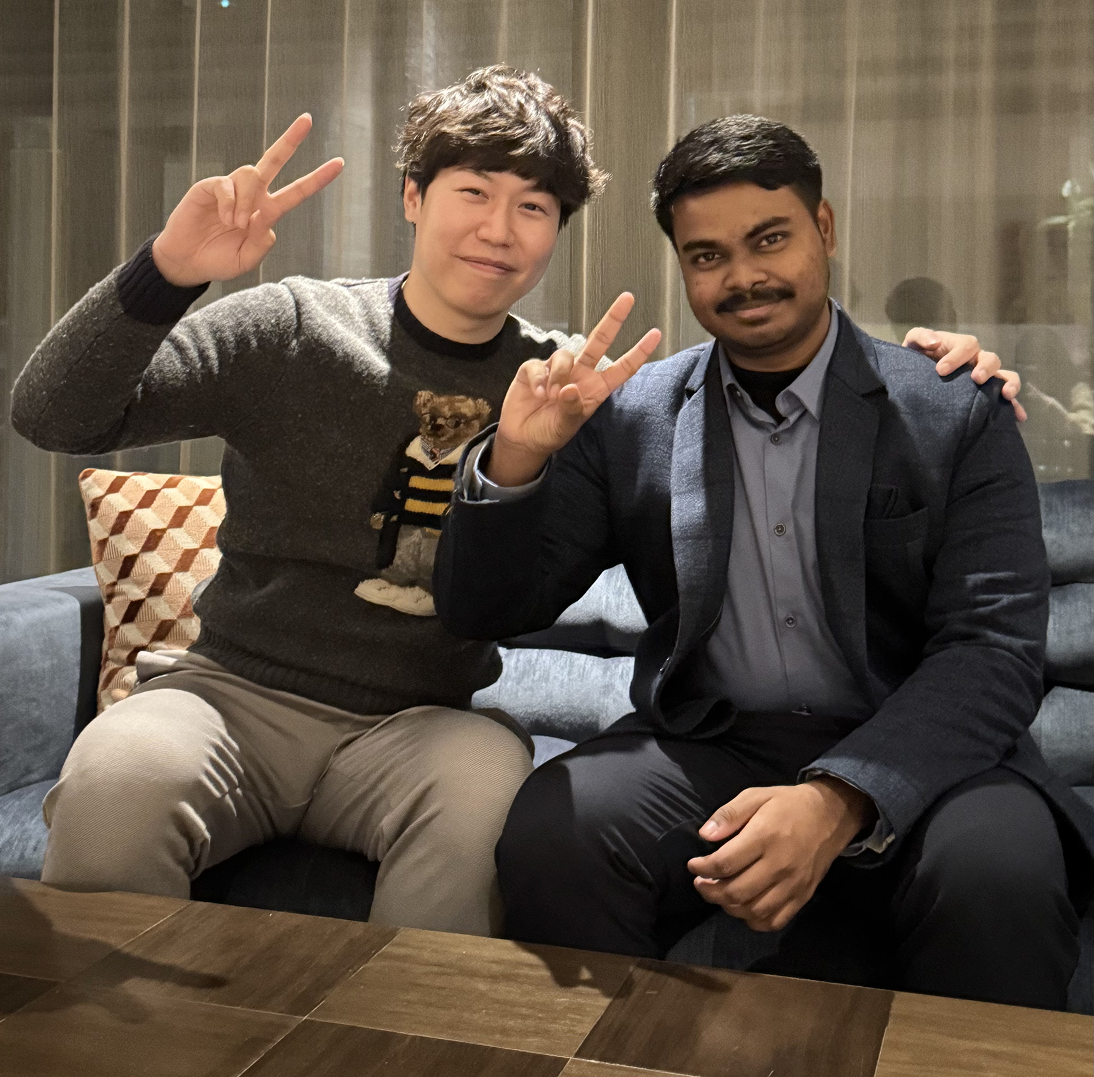
"I basically decided to take a gamble. I wanted a chance to become financially independent. And then after that, I wanted to go back to research and work on something groundbreaking."
The other offers on the table were all established organizations, which means stable and safe. But to him, that was exactly the problem.
"Even if I joined them, there wouldn’t be any upside in the equity or salary down the line. But with Jurin, since it was a startup at a very early stage, I felt there was at least a chance it could turn into generational wealth."
What convinced him was that our founder Rise had already achieved that kind of financial independence through previous startups before.
"I was like, okay, he already knows how to build this stuff. I was in."
Likith spent his undergraduate years doing research. Labs in Hong Kong, Singapore, Abu Dhabi. That's a different mode of thinking entirely from building and shipping product at a startup.
In research, you know the question, but not the answer. You're trying to discover something new, often without knowing which direction will work, or whether a clear answer even exists.
In engineering, you know the goal. You just have to figure out the best way to get there and to make it work in the real world.
Here’s how he described research mode vs engineering mode.
"Research is like a map where you need to find a treasure and you have no idea which path will lead you to success, or whether the treasure even exists. In engineering, you know the destination. You also know the direction of the path because there are people who’ve solved similar problems before. But you still need to figure out the right way to walk it, what tools to carry with you, and how you use existing tools in that specific path."
We asked Likith what he's most proud of building and he went straight to the long game.
"If Jurin becomes the next-generation platform for call centers in Japan, the first person to merge a pull request for physical phone voice agents is myself. I would be proud that I laid the foundation for that together with my best friend."
The second thing is less visible but just as important. He spent about a month engineering the release cycle to ensure different branches of customers receive updates on schedule and that nothing breaks along the way.
"The release cycle took about a month to build and engineer. That is what I feel is most challenging here, and it will still be the most challenging one if you ask the same question a year from now. It gave me the confidence that I could build things, and even if I know nothing about it, I could learn it, understand it, and build from there.”
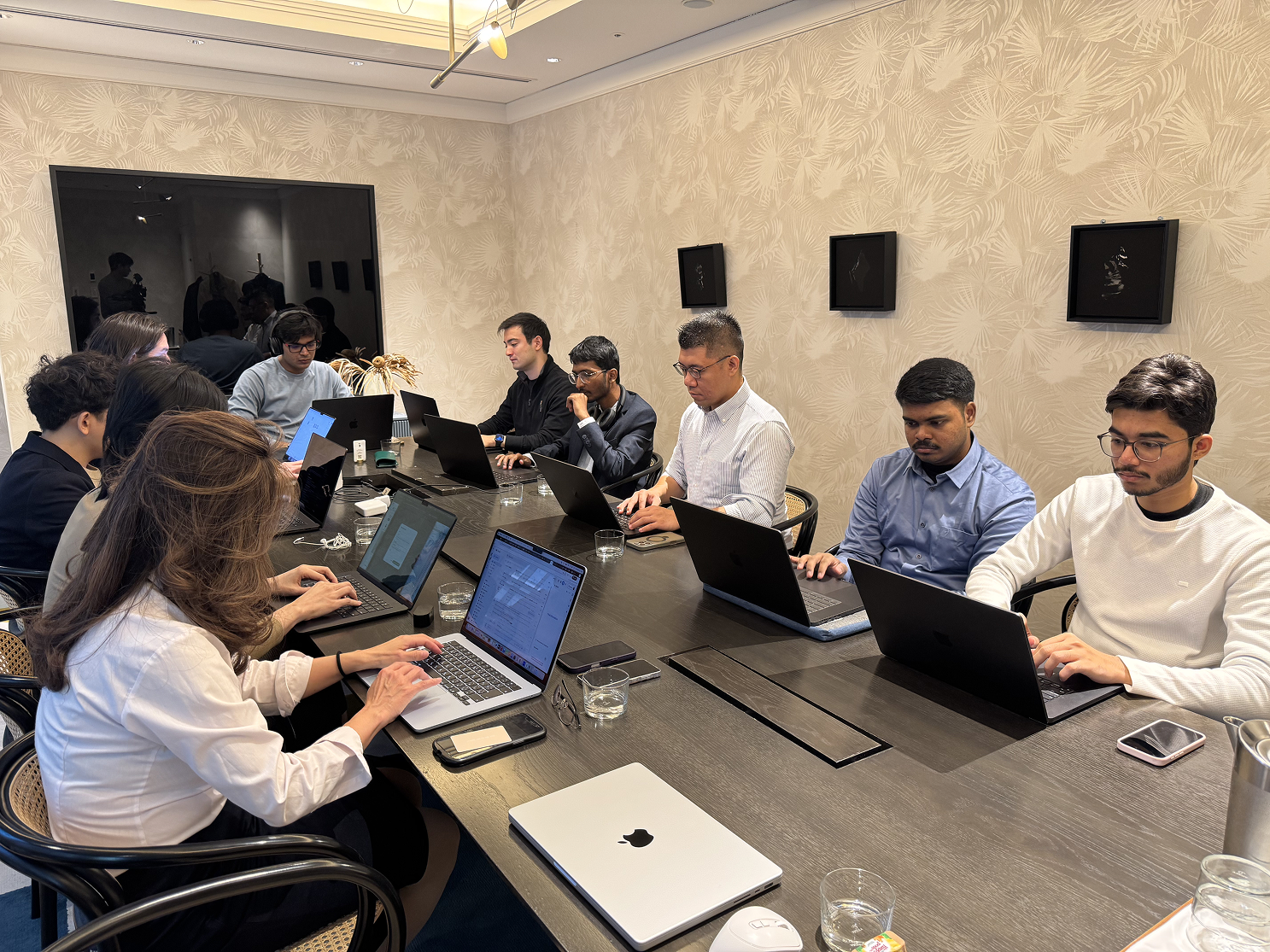
On top of his engineering work, Likith has been working directly with Rise on product. Which is a very, very unusual opportunity. Normally, he says, you only get that opportunity after 10 or 20 years of experience.
What surprised him most was how different product thinking felt from engineering or research. The first challenge is understanding which features actually have a use case in the real world. Then comes the design side of it.
"Once I stepped into product, it felt like a chess game where you need to predict what the user would be doing. You have to think of various situations that the user might want to do once the feature is out and make it really easy for them. At the same time every new feature has to slot in like a puzzle piece, consistent with everything that already exists, and nothing that breaks the logic of what came before."
He admitted this mindset didn’t come naturally from his research background, and he’s excited about building it currently.
"When I suggest a new architecture or method to the engineers, and they immediately see why it works, that’s when I feel I did something good. Or when I solve something nobody else has figured it out yet."
"It's challenging. If things don't end up the way you want, there'll be a hassle to make things right. You’re awake until 5 fixing it if someone messes that up. But that is the game we are playing here."
A lot of the late nights come down to prioritization.
"The solution for a bug fix is straightforward, simple, small number of lines. But there is a mindset that we want to do things right instead of a quick fix. You do a hot fix, deploy it at night, make sure the app is usable, and then the next day you come back and do it the right way. If engineers could do it this way, they could fix the problem, sleep on time, and come back to a better architecture.”
"People who thrive here are people who are willing to accept the game, that it's not going to be easy. There will be conflicts between your personal life and professional life and you need to be very good at managing both."
He's equally direct about who probably wouldn’t fit in our environment.
"If you have already decided that you want a stable life and settle down with family, Jurin is not for you. The game we are playing here means there are a lot of sacrifices. If someone clearly wants a 9 to 5 job and after five just wants to spend time with family, I would say no."
Japan has a well-documented labor shortage. Call centers are under pressure. Likith sees AI agents as one of the few realistic ways to scale service work without scaling human stress alongside it.
"In Japan there is a labor shortage. AI would be available to answer queries 24/7. It decreases a lot of stress on humans working at call centers. In the future, you could just speak with your phone with a Jurin agent and it does things for you. Not just one industry, this can be applied to many industries."
We asked him what he wants to look back on from this chapter of his career, 20 years from now.

Before I joined Jurin I was completely focused on research and I thought engineering wasn’t for me. Then I joined Jurin. There's this culture here where you switch teams every three months. Once I reached the release cycles, I became confident that irrespective of the problem handed to me in the future, even if I know nothing about it, I can learn it and solve it myself. This is what I would like to remember after 20 years.
— Likith Anaparty, Engineering
We’re hiring. Find out more at jurin.ai/career.
Jurin AI is building the AI Agent for high-performing enterprises. Our technology automates business communications (email, phone, messaging) and the workflows behind them for a better way to do business.Jurin AI is building the AI agent for high-performing enterprises. Our technology automates business communications (email, phone, messaging) and the workflows behind them for a better way to do business.
Within just one year of founding, we became one of the fastest growing startups globally. Jurin AI is a multinational corporation with presence in Japan, Korea, Singapore, United States of America, United Kingdom, India, Malaysia, Thailand, Indonesia, and more. Trusted by large Japanese enterprises every Tokyo resident relies on and respects, Jurin AI integrates seamlessly into existing tools and systems to execute tasks across 100+ languages, enabling teams to tackle labor shortage, focus on strategic, high-value activities, and finally unlock scale to grow the business by another 10x.
Media Contact
press@jurin.ai


