Farz was the second engineer at Applied Intuition and later became Head of Engineering as the company scaled to a $15 billion valuation. Before that, he worked at Google[x] and led a software team at Waymo during the early years of self-driving vehicle development.

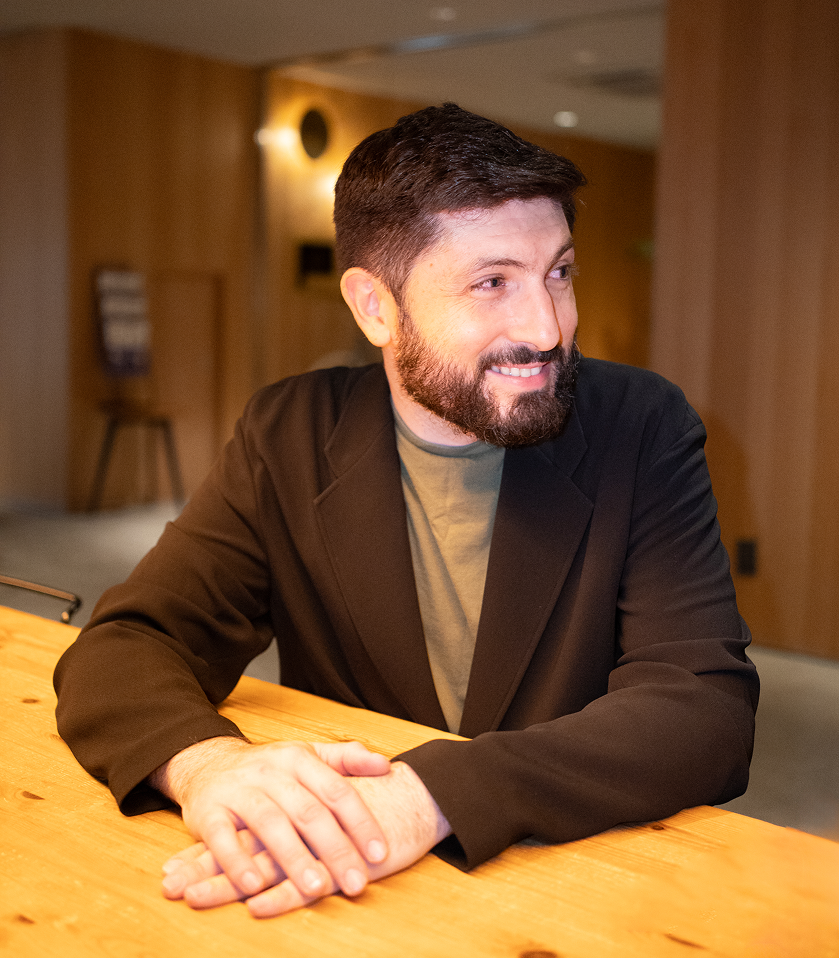
Farz does not describe his career as something he fully planned. What it follows is a pattern of relationships built over years, helping people without expectation, staying curious, keeping in touch.
Applied Intuition came through a friend of a friend. In 2011, while he was working at Google, Farz helped someone with a side project for free.
"I basically decided to help him out in 2011. Zero dollars. I was working at Google, helped him in my free time. He knew me before and after. If you had asked me at the time: is he going to get me a job at a company? I would have said no. I just talked to him for other reasons."
Years later, that same person introduced him to Qasar Younis, the CEO of Applied Intuition.
Farz did not know they knew each other. He did not know they had driven to the Bay Area together. He did not know that one unpaid side project from years earlier would eventually put him in front of the founder of one of Silicon Valley's most important automotive software companies.
He joined Applied Intuition as its second engineer.
At Waymo, Farz led the software side of hardware, the team responsible for getting physical components manufactured, tested, installed on vehicles, and tracked through supply chain. It put him at one of the hardest intersections in engineering: two disciplines that move at completely different speeds, trying to build the same thing together.
"In software, if you get it working for one, you can get it working for a billion. Hardware is a very different story. Making one of something versus ten versus a hundred versus a thousand, these are all radically different problems with way bigger lead times and costs."
Engineers call it impedance mismatch. When software and hardware have to meet, the people in the middle are caught between two things that can't agree on pace.
"Imagine gears with motors attached, one wants to go twice as fast as the other. There's always going to be problems where those gears connect."
It shows up in unexpected ways. At Glass, the software team kept changing the definition of what it meant to perform a lookup gesture, the angle, the speed, all of it. On the manufacturing line, they had a physical device that tested whether the gesture worked. Every time someone in the firmware stack changed the definition slightly, without telling anyone, the test would break. They'd scramble looking at hardware first. Hardware people would say nothing's wrong. Eventually they'd find the person who changed one line in the middle of the stack.
"He said, 'Well, it's better now.' Okay. Did you know that we checked for this on the manufacturing line? He said, 'No, why would you do that? That's dumb.'"
Nobody was wrong exactly. They were just operating in completely different worlds with completely different assumptions about how things worked. The people who navigate that gap well are rare. You have to understand both worlds well enough to translate between them and know where the breakdowns are going to happen before they do.
Farz knew Rise from Applied Intuition, where Rise led customer relationships for some of the company's biggest accounts. They worked together often enough to stay in touch after.
What kept Farz engaged wasn't just professional respect, it was that Rise kept saying things that were strange and then turned out to be true.
"He was talking to me about the Japanese housing market. In Japan they'll tear down a house that's 20 years old. In California, my house is from the 70s and that's relatively new. He said these strange things about Japan and I'd go and research them and think, oh yeah, that's actually true. We just kept in touch every three to six months. I don't keep in touch with everybody but Rise always was interesting."
That pattern continued through Rise’s next projects in residential home design, then property management software, then Jurin AI. Every few months, Farz would hear what Rise was working on. Every time, it made more sense the more he looked at it.
He’d seen firsthand how Western companies approached Japanese customers, showing up with a finished product, no flexibility, take it or leave it. Then at Applied Intuition, he saw how they listened and adapted. They asked questions about stacked highways and edge cases nobody in the US had ever thought about. Japanese OEMs noticed.
"The Japanese customers appreciated us versus other software offerings. They said usually US firms go to Japan after they've already built the product. ‘Here's the software, figure it out.’ We were much more back and forth with them."
And when Farz looked at what Rise was building with Jurin AI, a product built specifically for the Japanese market, not retrofitted for it, with deep customer relationships and a go-to-market tailored to how business actually works in Japan, the company became more interesting to him.
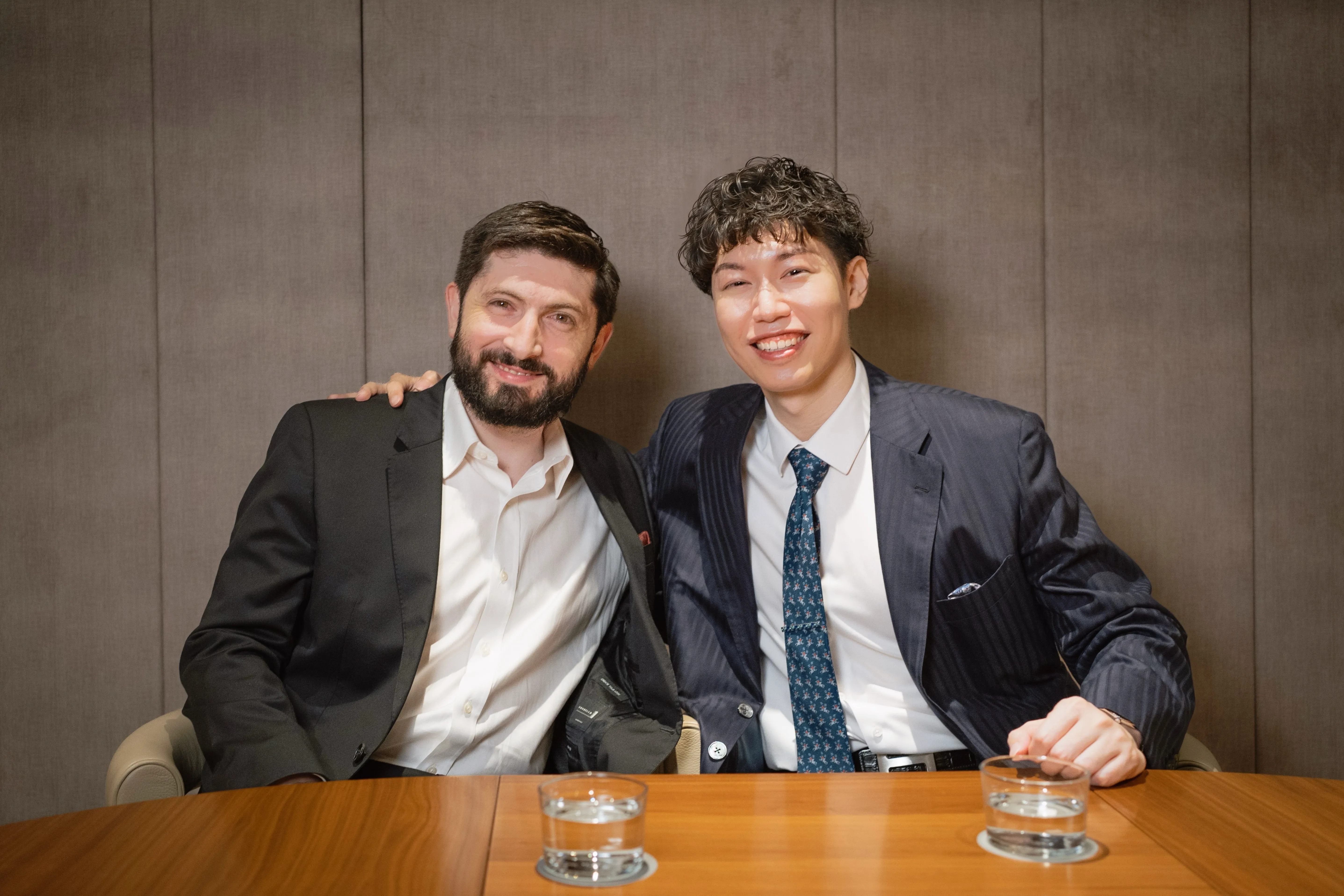
By early 2025 Jurin AI’s customer and contract growth was moving faster than the engineering team could support.
"Rise was trying to be both CEO and CTO and he wasn't sleeping."
Farz's wife was six months pregnant when Rise first reached out. He knew the last thing a startup needed was an interim CTO going on paternity leave two months in. He spent a month trying to find someone else. It didn't work.
So he put SonicInfra, his own startup, on pause.
"I said I can be your interim CTO, work with your engineers, take that load off of you for now, be more involved in interviewing for a long-term CTO."
He got into the architecture, worked through the codebase with the engineers, did his own coding, and led what became a significant revamp of the platform's engineering foundations. He also took on the search for a long-term CTO, developed specific criteria, ran interviews, evaluated candidates himself. He even has notes from that period written down somewhere, his record of exactly what Rise needed and what he was looking for.
Some weeks it was intense.
"I continued working with Jurin the whole time. Some weeks my wife got concerned that I'd stay up till 2am talking to these engineers multiple times a week and not get enough sleep."
The search for a long-term CTO was mostly about credibility under pressure.
"There are a lot of CTOs that can say stuff but don't actually understand those things. They'll say we use the latest technology, web tech stack, etc. And if you ask one or two questions behind that, they don't actually understand how the internet works. If you have any technical customers in the room and they basically embarrass your CTO because they don't understand what they're talking about, you lose a customer and that reputational damage extends beyond that one customer."
He wanted to find someone who could be impressive on first meeting and then back it up over months and years of a contract.
"It's very easy to find someone who can do one or the other. You need someone who can deliver on the promise."
Security was part of it too. Jurin AI handles a lot of customer data, more than most software companies, because it sits across email, documents, customer conversations, and backend systems all at once.
"Every week in the US I get an email that says your data has been lost into the ether. It's never the retailer, it's someone they trusted. So you always want to be impressive that the product is going to be good, but also impressive that the product will not break or fail. When you're talking enterprises, they've probably dealt with software with crummy teams and crummy leaders that talk a big game upfront and don't deliver."
When Farz started working with the early engineers, it stood out to him how fast they learned and how much work they did between conversations.
"I talked to them on Tuesday about something and by Wednesday they already had a lot of progress or had done it, and meanwhile I had slept. They were working the whole time. They learned quickly. I didn't have to repeat myself."
Those engineers are now team leads, managing engineers of their own. The team has grown significantly since early 2025.
When Farz came in, some US investors were skeptical. Jurin AI was Japan-first, the contracts were in Japanese, and Western VCs didn't know what to make of it.
"Rise had signed contracts, signed LOIs, trials ongoing. The VCs basically said come back in three to six months when these trials have converted, we don't believe you're going to deliver. A lot of that was western arrogance. They were investing in US competitors that were older, bigger, slower, and not as successful on a per dollar invested basis."
Part of it was a genuine cultural gap. In Japan, a verbal handshake can lead to a multi-million dollar deal based on reputational trust. A signed contract with a physical stamp is a very serious thing. In the US, the proof of a contract is whether someone pays.
"We docu sign and hope the guy pays. That's the proof of any contract."
The VCs were reading Japanese enterprise signals through a Western lens.
Farz saw it differently. Back then Jurin AI first sold to property managers. Farz knew property managers. He knew the problem.
"Property managers are super unorganized and there's nothing really like Jurin for them. They're always trying to mix two or three different pieces of software, email, tickets, a virtual phone number, WhatsApp, and none of these systems work together. A text and an email come in from the same tenant about the same issue. Is it the same issue? With Jurin putting all of that together in one place with AI, you're helping tenants because they're getting replied to very quickly. You're helping landlords, they don't have to wake up at 2am just to find out what unit number you're in."
The bigger picture excited him even more.
"There's always been tiers in customer support. Tier one is the one you talk to first. Tier two is when that guy couldn't fix it. Tier three, you're talking to the software engineer who designed the thing you're having a problem with. This is adding a tier zero: do you really need to talk to someone at all?"
What that changes for the people doing that work matters to him personally.
"If we can take the robotic-ness out of customer support and give it to a robot, people can be people. Right now you take a whole person and say stop thinking, follow the rules. They short circuit. They forget they're a human who can think for themselves. If the AI handles what a robot can do, the people remaining are getting the interesting stuff. They need to be creative, because if it was something the robot could do, the robot would have done it."
He's seen what happens when the wrong pieces are in place. A friend's startup had a CTO who couldn't handle negative customer feedback. Every bad week turned into a spiral, it's never going to work, we're never going to get customers, never never never.
"That company died. The product was good, there was a market. But it was suicide for the company."
Jurin AI had all three things he looks for. A product he understood and believed in. A market that was real and that Western investors underestimated. And Rise, someone he'd watched build and keep going across multiple ventures over many years. Someone who said strange things about Japan that turned out to be true. Someone worth staying curious about.

A product I want to exist, a market that wants the product, and a founding team I want to work with, especially in the early days when you're working way too much of the day together. If they're annoying or emotional, you know that pretty quick.
— Fahrzin Hemmati, CTO
We’re hiring. Find out more at jurin.ai/career.
Jurin AI is building the AI Agent for high-performing enterprises. Our technology automates business communications (email, phone, messaging) and the workflows behind them for a better way to do business.Jurin AI is building the AI agent for high-performing enterprises. Our technology automates business communications (email, phone, messaging) and the workflows behind them for a better way to do business.
Within just one year of founding, we have become one of the fastest growing startups globally. Jurin AI is a multinational corporation with presence in Japan, Korea, Singapore, United States of America, United Kingdom, India, Malaysia, Thailand, Indonesia, and more. Trusted by large Japanese enterprises every Tokyo resident relies on and respects, Jurin AI integrates seamlessly into existing tools and systems to execute tasks across 100+ languages, enabling teams to tackle labor shortage, focus on strategic, high-value activities, and finally unlock scale to grow the business by another 10x.
Media Contact
press@jurin.ai


