Joe graduated from Peking University, did machine learning research at Microsoft Research Asia, spent years as a Web3 Solution Architect at EY working with Japan's largest banks, and built a digital human startup before joining Jurin AI in 2025.

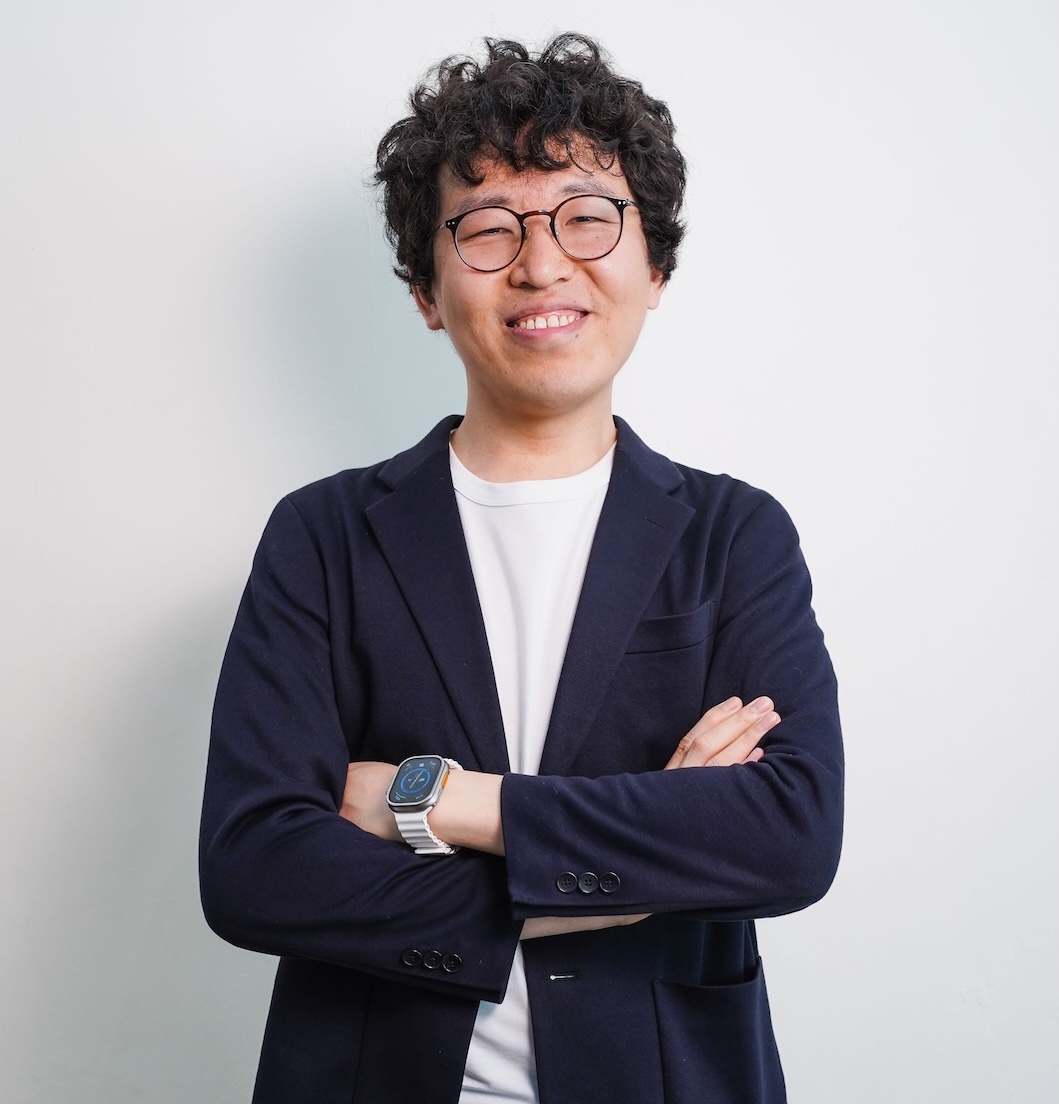
Joe's relationship with AI goes back further than most people in the room. He started in 2010 as a machine learning research intern at Microsoft Research Asia. Training models, inference.
Then in 2017, Web3 arrived and pulled him in a different direction. He watched friends make enormous amounts of money. He watched others end up in jail.
"In the Web3 world, there's just too much speculation. It's not just about the token and getting rich fast. You can really observe a lot about how people behave around money. A lot of those people are chasing what's in the frontier, what's on the edge. The reason why I came back to AI is the large language model movement."
Joe thought AI was different from Web3 in one important way: yes, the technology was new, but it was also immediately useful.
Joe has been in Tokyo since 2012. Over 14 years of watching a technologically cautious country from the inside, he has learned that Japanese companies do not adopt new technology just because the technology is impressive. The value has to become practical. It has to fit the workflow. And the people actually responsible for the work have to believe the project helps them too.
"Japan is generally very, very slow. Technologically slow. In general, people are just too slow in chasing the newest technology."
Most people would see that as a problem, but whether it was blockchain in 2017 or AI agents today, Joe knows his job is to take something that looks advanced from the outside and turn it into something usable inside a real company.
"AI stuff is fancy, just like Web3. For those big companies they only understand maybe 10 or 5% of the fanciness or coolness of the new technology. So my job is to explain, persuade, or bring those things into their actual workflow and bring them actual value."
Before joining Jurin AI, Joe started a digital human startup. The idea was to turn real people into digital versions of themselves and sell that technology to influencers.
He built the whole product himself.
“I’m the only developer in that company. I built the whole backend, frontend, the whole product, everything by myself. We tried to sell it to influencers, but it turned out to be too advanced. Every big influencer with more than 1 million subscribers, we spoke to people with 5 million Instagram subscribers, had a legal team. They didn’t see it as a business where we could make money together. They thought we were trying to take advantage of them.”
The product was technically interesting. But the market was not ready to buy it the way Joe had imagined. They saw risk before opportunity. They worried about being exploited more than they saw a new revenue stream.
“The biggest mistake was that we didn’t sell first. We built first. Rise had also told me, you have to sell first, then develop, then make the product real. But I kept making excuses. I thought, okay, this time is different, digital humans are different. Actually, it wasn’t that different. I now truly believe every successful startup sells first.”

Joe had known Rise from earlier days when they worked together on a project to automate house design.
Later, Joe introduced Sho, now Managing Director, Japan of Jurin AI, to Rise.
He still remembers the first time all three of them sat together in September 2024. The chemistry was obvious.
“Every time we caught up, Rise and Sho would tell me about the progress at Jurin AI. The engineering had moved forward. A major customer had signed. Something new had happened. I would tell them, yeah, I’m also making progress on my own company. But every time, I could feel how much Sho loved the work, and how much he loved being in this new environment.”
At the time, Joe was still building his own company.
But the more he heard about Jurin AI, the more he felt drawn to what Rise and Sho were building together.
“I admired that relationship. I wanted to join it and make the three of us even stronger. I already had a relationship with both of them separately, but I felt that if we came together, something interesting could happen.”
His previous startup also had three partners, but two of them were based in the US. They had only met once or twice in person. Most of the work happened remotely.
Jurin AI felt different. Rise, Sho, and Joe could meet every week. They could work side by side. The relationship was something he could actually build inside.
“I can say for sure that the main reason I joined Jurin AI was Rise and Sho. Of course, if you want to join a startup right now, AI is a no-brainer. But that was only a small part of it. The main thing was human. It was the relationship, my two friends.”
“I always focused on bringing something from zero to one. I love that creative process. If I don’t do it, it won’t be possible. Then I create something from zero to one, and throw some people into the one to make it become 50 or 100. I always focused on the zero-to-one thing.”
Joe has always seen himself as the person who starts things, proves things, makes something possible. But the identity shifted at Jurin AI.
“After joining Jurin, I don’t have to prove that I’m the strongest guy, the smartest guy, the lead. Every person here is smarter than me, actually. Their brains move super fast. It’s meaningless to prove that only I can do something. I gradually shifted from being an innovator to delivering true value to the customer.”
His work is no longer only about building the first version of something. It is about making the thing useful to a customer, inside their workflow, with their language, constraints, team structure, and expectations.
For Joe, delivering true value means learning to speak the customer’s language before expecting them to speak yours.
“It’s not really just making it better. It’s about satisfying the customer at different levels: the product level and the human relationship level. You need to really speak with their words. Maybe at the start of a project, they don’t even speak the same language as you. You comply with them, not the other way around. You learn their language and speak with them in their language.”
One pattern Joe sees often is the gap between top leadership and the teams asked to execute.
Executives understand that AI matters. They know their company cannot afford to ignore it. But in Japanese enterprises, the decision doesn’t always move cleanly from the top of the organization to the people responsible for implementation.
“The top leaders of traditional companies watch the news every day. They know what OpenAI is. They know what Anthropic is. They know what’s happening. They also feel worried: oh, we’re slow, we have to chase the trend, we have to make some change. But the structure itself is not able to reflect the top leader’s ideology that efficiently.”
The comparison to China makes the difference clearer.
“In China, the CEO is everything. He says something and everyone just does it. In Japan, it’s not like that. The CEO has to pass his ideology from middle management all the way down. And those middle managers care about their position, their status, their income. Stability is the only thing Japanese people generally like.”
The result is that the top leadership signs the deal, excited about AI transformation. Then the actual work falls to middle management and team leads who were not part of that decision, and these people see it as extra work, extra risk, or someone else’s priority.
Joe tackles this by making the project matter to them too.
“If you make this project very successful, maybe as a result they can grow to the next level, become a manager. If you can help them at that very truthful level, they will take ownership and commitment.”
There is also a practical resource problem.
AI agents do not become good by magic. They need business knowledge, internal context, customer language, workflows, edge cases, and constant polishing. Jurin AI builds and configures the system, but the customer has to bring the knowledge only they have.
“You have to make sure they have the people internally to help polish and improve the agent, to make it really work. No one outside the customer’s company knows their business model inside out. I don’t know their professional knowledge. Only they can do a lot of that knowledge work. So we have to make sure those people exist.”
Joe doesn’t believe in weird customer requests. Every need, however strange it looks on the surface, has a reason behind it.
One of Japan’s largest real estate companies came to Jurin AI with a request that looked nothing like the typical AI agent use case. They wanted help processing inquiry emails. Not automatically replying to them, not replacing people, not building an agent that chats with customers end to end.
They wanted the system to receive an email, analyze it, match the issue to the right vendors, create group chats, and add the relevant people.
The feature used just about 5% of the AI capabilities, but the value to the customer was not in how much AI was used, but whether the workflow became easier.
In procurement management, the company is always operating between customers and vendors. Someone has to understand the issue, identify the right vendor, bring the right people together, and keep the work moving. Automating that matching and coordination layer is genuinely useful, even if it doesn’t look like a flashy AI demo.
“The first thing that comes to mind is the handbook written by Rise. The handbook itself is the culture. It covers lots of trivial stuff, but it also has some really true thoughts from the founder. It’s not only directly about work. Some things are very philosophical, very helpful for your mindset, for you to grow.”
The second is seikou saseru, which is a Japanese concept that means enabling others to succeed.
Help the customer succeed. Help the team succeed. Help the company succeed.
That idea now runs through Joe’s day-to-day work.

You always think about how to help other people succeed. If they succeed, your own role becomes secondary. For example I introduced an engineer to Jurin AI. When they came in for a work trial, my job was not to convince them to join. My job was to help them understand the culture, settle in, and succeed.
— Joe Meng, Engineering
We’re hiring. Find out more at jurin.ai/career.
Jurin AI is building the AI Agent for high-performing enterprises. Our technology automates business communications (email, phone, messaging) and the workflows behind them for a better way to do business.Jurin AI is building the AI agent for high-performing enterprises. Our technology automates business communications (email, phone, messaging) and the workflows behind them for a better way to do business.
Within just one year of founding, we have become one of the fastest growing startups globally. Jurin AI is a multinational corporation with presence in Japan, Korea, Singapore, United States of America, United Kingdom, India, Malaysia, Thailand, Indonesia, and more. Trusted by large Japanese enterprises every Tokyo resident relies on and respects, Jurin AI integrates seamlessly into existing tools and systems to execute tasks across 100+ languages, enabling teams to tackle labor shortage, focus on strategic, high-value activities, and finally unlock scale to grow the business by another 10x.
Media Contact
press@jurin.ai


