Markus is a software engineer at Jurin AI. He was born in China, moved to Japan in 2015, co-founded a company, and joined Jurin AI in January 2026. He works at the intersection of engineering and customer work, which is exactly where he feels most at home.

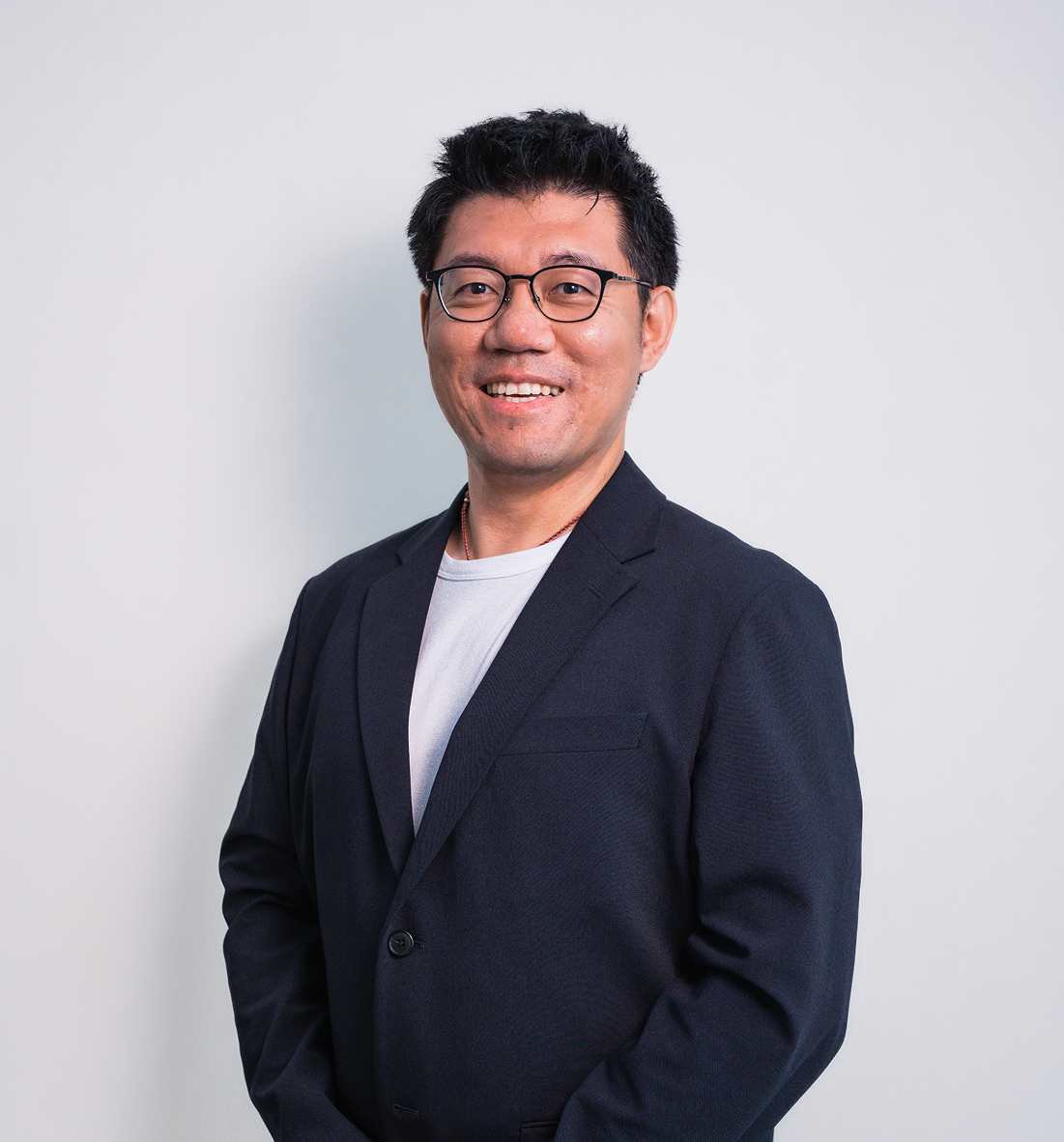
Before Japan, Markus spent five years as a software engineer in Beijing. His former supervisor, who he had worked closely with, made him an offer: come to Japan and build something new together.
"Before I came to Japan I worked in Beijing for five years as a software engineer. My previous boss gave me the offer: do you want to work in Japan? I started learning Japanese and came to Japan as an engineer. The main reason I wanted to come was to give my family a better life. My son had just been born."
He arrived in Japan in 2015. Two years later, he became a founding member of a startup. Two years after that, he became its CTO.
His previous company started in real estate. The team built an IT system for the Japanese property market, connecting buyers and sellers, helping customers find properties and commit to purchases. After selling the real estate platform to a larger company, the team pivoted into pharmacy.
"Without our system, the staff in the pharmacy would have to input all the information from the prescription manually, which costs a lot of time and causes a lot of human errors. We built a system using AI technologies such as OCR where you input an image and output the text, and we added many AI features to help the staff input the information more efficiently. By the time I joined Jurin AI, we had been building that system for over three to four years and we made it to the top in Japan. No competitors."
Real estate and pharmacy had nothing obvious in common. Markus did not see that as a problem.
"Maybe that is my advantage as an engineer: I embrace new things. I think, hey, this is very interesting, let us try this. Because we were new to that industry there were a lot of problems we had to solve, but I just enjoyed the difficulty of resolving those problems."
What both industries shared was something more important than domain knowledge: they were both traditional, slow to change, and deeply skeptical of anything that disrupted how they had always operated. That was where Markus developed the approach he still uses today.
"Traditional industries in Japan do not embrace change. If you tell them they have to change, that will scare them off. So the strategy is: first, understand their current workflows. Find out where there is repetitive work that can be silently replaced by technology. Step one to step five, they have to do it manually. Then we silently replace step two. Then step four. Eventually all the essential steps are replaced. You tell them you do not have to change everything, and that is how you bring them along."
Japan also demands more from a product than most markets.
"Japan demands higher quality and higher stability from a product than other markets. In China, if something goes wrong people have more tolerance. In Japan, not only does the product quality have to be strong, but the way you present yourself as a company, the way you conduct business… all of it is scrutinized. As a foreign engineer, you have to master certain things that go beyond the technical."
That understanding took years to build. When the AI boom arrived, Markus started wondering whether the years he had spent building it were going to be enough for what came next.
In 2025, AI tools changed how engineers work fast enough that the change was impossible to ignore.
"Last year the AI boom happened. New AI tools, new AI coding tools that changed the way engineers work. When I saw those tools I started thinking: in the next ten years, will I still be valid? Is there a better career option, a better way to work? Maybe it is time to change."
At the same time, the final months at his previous company had begun to feel like a very specific kind of trap.
"You know an NPC, like if someone clicks on you, you say hey, greetings, what can I do for you, and a couple of options pop up. When the player selects something, you just give the pre-determined answer. That was the situation I was in at my previous company in the last several months. I hated that. I felt I had lost my ability to think for myself."
"The biggest difference between an NPC and a player is that an NPC has to stay where they are stationed and wait for people to interact with them. As a player, within the rules and permissions, you can explore the world, make yourself stronger, have your own way to think and act. You are not replying to people based on a pre-determined set of answers. I started as a player, then became a senior NPC, not just a primary one. I felt like a fully equipped AI agent with a knowledge base, given a prompt, and only allowed to output within those constraints. There was no room for adaptive thinking."
He was trying to understand where engineering was going next while recognizing that where he was had already stopped giving him room to grow.
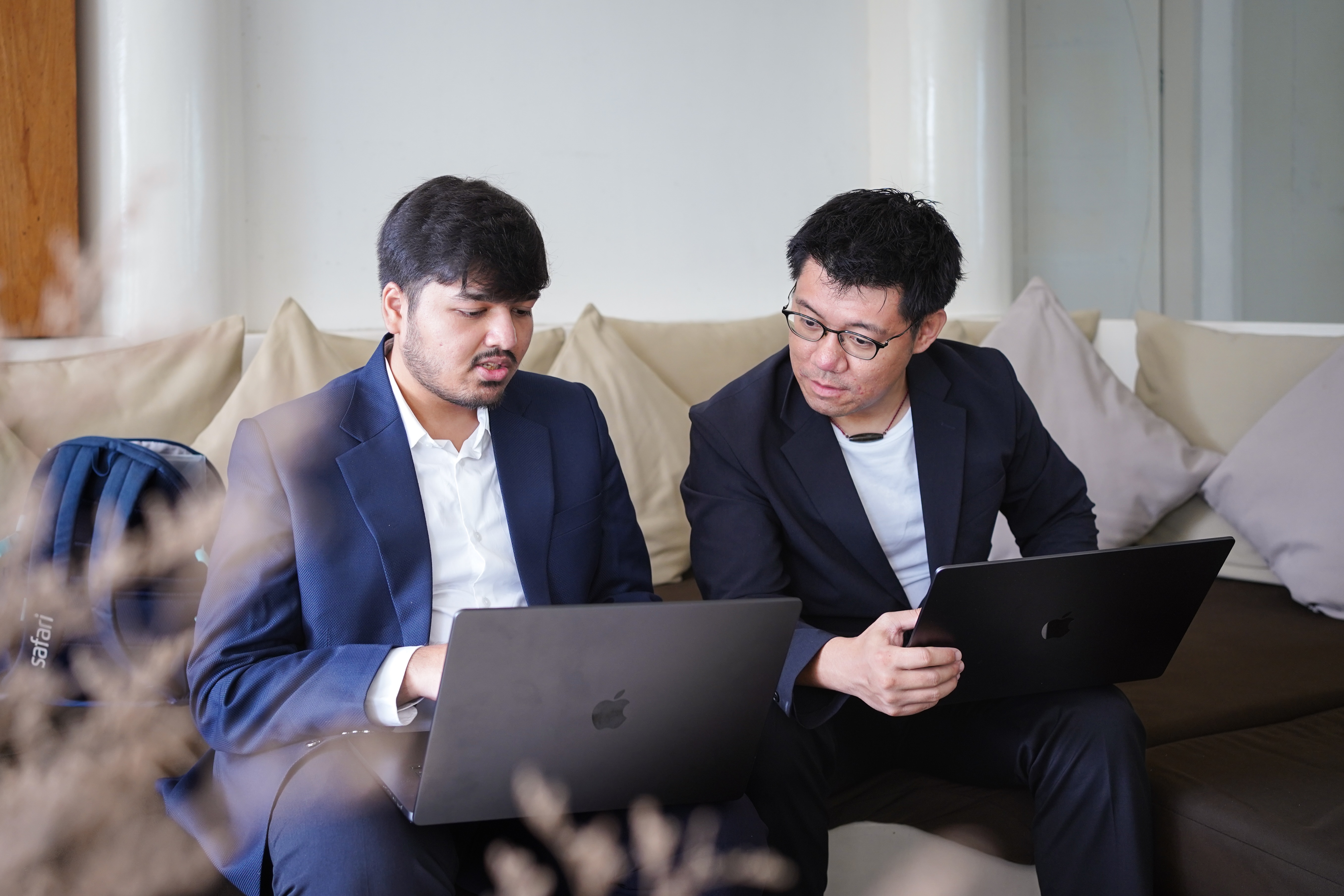
As Markus was sitting with that question, Joe was the first person who came to mind.
"We had dinner together. He told me about Jurin AI. I knew from him that this is a global company, building things that are really cool, embracing people who use AI efficiently. I started to consider that it was time for me to trust Joe and take a leap."
He did not decide immediately. He spent about three weeks reading almost everything Rise had written before making up his mind.
"The culture was written down, thought through, and real. There was no gap between what was on paper and what I actually experienced when I joined. That is rare. What it means in practice is that everyone on the team operates from the same playbook. There is a shared standard, and that standard is high."
Markus had spent a decade navigating Japan's enterprise market. He knew the industries, the culture, the pace. What he did not fully anticipate was how much Jurin AI would ask him to grow beyond engineering.
"The biggest challenge is English. I learned English for over 20 years but this is the first time I have used it in my job day to day. Working with colleagues outside Japan and China, with different cultural backgrounds, I was not sure if I could communicate with them correctly. Because of my English, sometimes what I said came across as impolite. Rise pointed it out directly: that is not the polite way to say that, you have to be more careful."
"Communication at Jurin AI is simple and direct. In a typical Japanese company there is a lot of going around the point. At Jurin it is straightforward. At first that was a challenge for me, especially in English, which is already a more direct language. But as time passes I feel much more confident now."
The adjustment was not just English. It also meant learning to receive feedback differently.
"I feel I learned most from Rise (no I’m not buttering him up). He gives you feedback in the shortest time. In a lot of companies, not many people point out your weaknesses so directly and clearly, and tell you what to do. Rise sees something, he points it out immediately. It feels like suddenly being stabbed by something sharp. But when you think carefully about it, what he pointed out is exactly right. Once you get used to it and understand the intention, that kind of feedback is the most helpful for your growth."
Joe became another source of learning, in a different way.
"Joe and I worked together seven or eight years ago and he has changed a lot since then. He is more reliable now in his work, and he has a lot of insights from working with customers. Every time we sync he shares those insights and I always feel like I learned something."
The NPC feeling Markus had at his previous company is precisely what he is working against at Jurin AI. Not just for himself, but for the customers he works with.
"When I joined Jurin AI, one part of it was because I recognized the culture and felt it matched my work style and personality. Another part was that I recognized the value of the product. Meaningful work is to deliver our product to the people and enterprises who need it. As long as we deliver value, profit comes along with it. But you should not start by thinking about profit. First establish the value."
"Beloved means that customers can feel, through their experience of using our product, that we are sincerely trying to solve the problems they are facing. I hope they feel confident in our product during that process. The product is still being polished, it is not 100% yet, but I hope they can tolerate the current limitations and still feel confident about what it will become, and want to move forward together with us."
One customer showed him what that looks like when it works.
A moving company received a high volume of calls every day. Someone had to stand at the front of the line, pick up each call, identify the caller's enquiry number, figure out which department was needed, and transfer the call. That process cost five to ten minutes per call, and it required a dedicated person to do nothing else.
"With Jurin AI, the agent stands at the very front of the line, picks up the call, identifies the inquiry number, searches for the destination automatically, and tells the caller: I will transfer you to that department. The work is done. Average handling time cut to half. No one needs to be assigned to that position every day. The customer appreciated that they can now focus on the work that only they as humans can handle."
The approach was the same one Markus had developed over a decade: understand the workflow, quietly replace the repetitive steps, and let people return to the work that actually needs them.
His family sees the change too.
"Yes, the hours are real. But I actually feel like I have more time now than before. The time is mine. I am not being interrupted unnecessarily. I can focus on what matters and move fast. My family sees it too: they are happy to see me, at around forty, still throwing myself into a new challenge every day."
Markus has a favorite line from God of War. Kratos says it to his son Atreus after Atreus apologizes for falling short.
Do not be sorry. Be better.
"Rather than spending time feeling sorry that you did not make it, use that time to make yourself better instead."
In Japanese culture, “sumimasen”, which means “sorry”, appears in almost every interaction. Markus says it too when he is with Japanese colleagues. But he does not believe in it.
"What you should do is not accept that you are weak and apologize for it. What you should do is make yourself stronger."
He applies that philosophy to everything he has had to learn at Jurin AI.

Whether it is cultural collision or communication challenges, whether I am being misinterpreted or my work style does not align with the culture, instead of saying sorry I can only do it like this, why not approach it with openness and find a better way next time?
— Markus Zhao, Engineering
We’re hiring. Find out more at jurin.ai/career.
Jurin AI is building the AI Agent for high-performing enterprises. Our technology automates business communications (email, phone, messaging) and the workflows behind them for a better way to do business.Jurin AI is building the AI agent for high-performing enterprises. Our technology automates business communications (email, phone, messaging) and the workflows behind them for a better way to do business.
Within just one year of founding, we have become one of the fastest growing startups globally. Jurin AI is a multinational corporation with presence in Japan, Korea, Singapore, United States of America, United Kingdom, India, Malaysia, Thailand, Indonesia, and more. Trusted by large Japanese enterprises every Tokyo resident relies on and respects, Jurin AI integrates seamlessly into existing tools and systems to execute tasks across 100+ languages, enabling teams to tackle labor shortage, focus on strategic, high-value activities, and finally unlock scale to grow the business by another 10x.
Media Contact
press@jurin.ai


